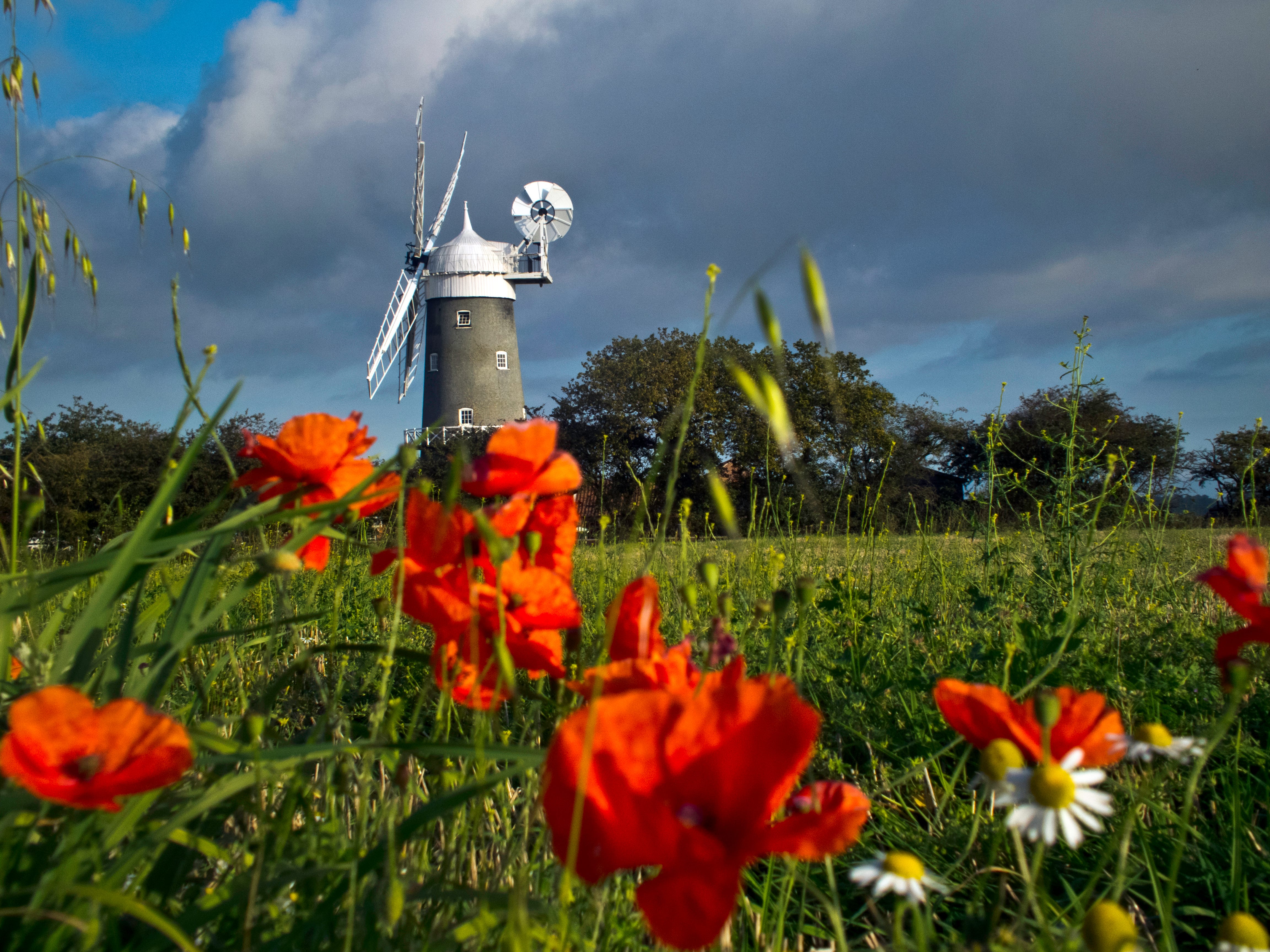
David Phillips was born and bred in Hickathrift country – the Marshland area of West Norfolk – and he returns to his home county as often as possible

I WAS born and bred in West Norfolk – in Tilney St Lawrence, to be exact. I spent the first 27 years of my life there and only moved way — reluctantly — to take up a job as editor of a fishing magazine based in the Midlands, but I return as often as possible. The Covid lockdown was the longest I stayed away from my home county — six months — and once the restrictions were lifted I celebrated by heading east in my 1984 Land Rover Ninety.
I soon booked a berth at the lovely Swan Inn, at Hilborough. It’s a pub I’d visited before, but not for a long time — more than 20 years, in fact, since I chose it for a lunchtime stop when driving the Peddars Way with the Breckland Land Rover Club, back in the late 1990s. That had been an amazing trip that inspired me to explore more greenlanes and write about them, which was pretty groundbreaking at that time, because the Land Rover magazines were mainly full of overseas adventures. It seemed nobody had thought about writing about the brilliant fun to be had driving your Land Rover on the ancient unpaved roads of the British Isles. I was delighted to change all that during my time working on Land Rover Owner magazine.
Norfolk, of course, is the perfect county for greenlaning, because there are so many byways you can legally drive — especially in Breckland with its countless miles of forest tracks on sandy soil, which doesn’t get rutted and undrivable in wet or wintry weather.
Not that it was either for my trip in high summer. Instead I was treated to a spectacular display of colourful wild flowers. Because most of the tracks are through either forestry or military land, they have never been treated with modern artificial fertilisers or herbicides. As a result, the natural flora flourishes to a degree that most of the countryside hasn’t seen since before World War II.


One of the strangest sights here is the old pastures that haven’t seen livestock for many decades. The grass is still kept short by the vast numbers of rabbits that thrive in this heathland, but they leave alone the sea of deadly ragwort, in full yellow bloom at the time of my visit. It’s a plant you never see on fields used for growing hay or grazing livestock, because it is lethal to cows, sheep and horses, and ruthlessly dug out by farmers.
There’s a certain irony that this peaceful corner of Britain remains unspoilt mainly because of the threat of war. Much of the area is a military firing range and out of bounds, but you’re unlikely to wander into a battlefield by mistake. They are clearly marked by warning signs (they’re also locked and barred, anyway).
Desert Rats

Not far from Hilborough is a memorial to the Desert Rats, with a WW2 tank mounted atop a large brick plinth. Its descendents still patrol the heaths and forests of this part of Norfolk today, training in order to keep the rest of us safe. There is something immensely noble about serving your country, in my view, and Britain’s service men and women always have my utter respect.
My home for the weekend, the Swan at Hilborough, was already 40 years old when Norfolk’s most famous son, Admiral Lord Nelson, was born in 1758 a few miles further north, at Burnham Thorpe. I’ll bet it’s had some real characters sup at its ancient bar since 1718, but few could have appeared so bizarre as today’s staff in full face visors. They dealt with threat of Covid-19 in a calm and assertive manner that I found hugely reassuring, as did some old friends who came to join me for a drink later that afternoon, including childhood sweetheart Sharon from primary school days, who wanted me to sign her copy of my recent book.

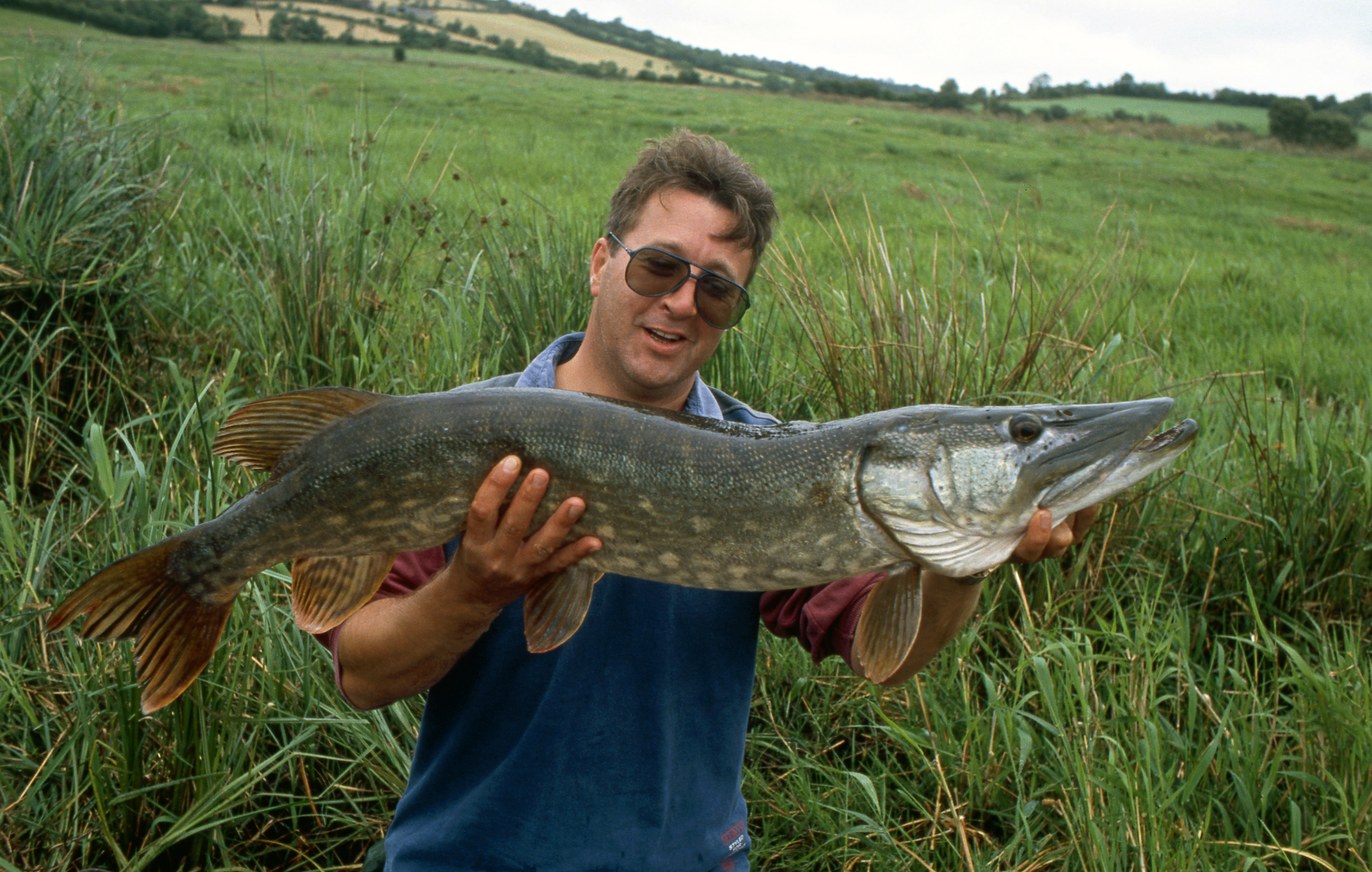
The pub itself is but a stone’s throw from the infant River Wissey, a tributary of the Great Ouse. Many miles downstream, where this river enters the flat fenland, I fished it often for pike in the 1980s and caught some real monsters to over 20 lb, particularly in the deep holes close to the huge sugar beet factory at Wissington. In its upper reaches in Breckland it is a shallow, fast-flowing stream inhabited mainly by wild brown trout, but there’s a ford nearby and I can’t resist driving through it. It’s so pretty I clamber out to take a photo, getting very wet feet in the process — but who cares on a sunny morning in July?
As always, the photos don’t do justice to the subject matter. A Land Rover stationary in a ford looks like it’s been parked there. It needs to be photographed while splashing through to capture the movement and bring the picture alive, but travelling alone with a dog I have no option. Billy the Wonderdog (who sadly passed away in March 2025) was a smart mutt, but he’d never be a cameraman.
Norfolk has always thrived on its splendid isolation from the rest of the country. Transport links to, and particularly within, my home county have always been notoriously poor. Even today there are no motorways and it takes two hours to travel by train from London to Norwich (99 miles) — about the same as it does from London to Paris (210 miles).
Within Norfolk, the narrow, twisting B-roads and dusty, single-track unclassified roads make this the ideal countryside to explore in a Land Rover of a certain age. An average speed of 50mph is something to aim for in these parts. Luckily, I’m happiest when enjoying life in the slow lane.
Because of their physical isolation from the rest of the nation, Norfolk’s inhabitants enjoy a reputation of doing things differently. Eccentricity comes as standard. In these parts it’s known as “Normal for Norfolk”, or “NFN” for short. My good friend and local author Keith Skipper, doyen of all things Norfolk, reckons the phrase was invented a century or so ago by doctors at Norwich Hospital, frustrated by patients apparently incapable of describing their symptoms in anything other than the colourful but impenetrable local dialect. Although invented as a derogatory term for the simple rustics, “Normal for Norfolk” was embraced with pride by those same peasants. Those of us born and bred here celebrate our own eccentricities.
I once tried to secure an interview with Land Rover-owning Desmond MacCarthy, a farmer whose offbeat ways of running his family estate at Wiveton, on the North Norfolk coast, was the subject of a well-received BBC Two documentary series, Normal for Norfolk. Unfortunately, my request was dismissed in a curt email that informed me that Desmond was far too busy to waste his time talking to me and that I would be better rewarded talking to other local farmers who were far more interested in Land Rovers. And the rude bastard was right, of course.
Take John Savory, who farms at Great Ryburgh, near Fakenham. He makes his living growing crops and rearing quail, which he sells to top restaurants all over the country, but his real passion is Land Rovers. His everyday transport around the rolling acres of his farm is a Defender 110, but his pride and joy is a beautifully-restored 1949 Series I.

“We’ve always had Land Rovers,” said John, in a tone of voice that suggests there really wasn’t a realistic alternative.
“My dad had a Series I, a Series II and a Series IIA. He also had one of the first Range Rovers, a J-reg, in 1970 or ‘71. I learned to drive around the farm in a Series IIA long wheelbase, that I’ve still got in the shed now. It needs a new chassis, but I might restore it one day.
“My everyday workhorse is a 1996 300Tdi Defender 110, but I always wanted an early Series I with the headlights behind the grille.I eventually found one in 1991 at Hilborough, near Swaffham. It wasn’t a runner, but I paid £500 for it. I brought it home, stripped it down and started looking for the bits I needed.”
John was in his late teens when he embarked on his project. The chassis was in very good condition, but many of the mechanical parts needed replacing. Full of enthusiasm, he managed to source a good 1600cc sidevalve engine to replace the seized original, which had a cracked block and was beyond repair.
“The seller wanted £100, I offered £50 and we agreed on £70,” said John. “That was about 1996, before Series I prices got silly. It would cost over £4000 to buy an original 1600cc engine these days.”
Bargain bits
But like most young men, John’s early enthusiasm for his project dimmed and took a back seat as he enjoyed a full social life and, later, took on family responsibilities. As the years passed, the Series I and its collection of bits gathered dust in a barn on the farm.
He was married with two young children by the time his interest was rekindled. John remembered it well: “It was at the Holkham Game Fair in 2013. I went to the Series One Club stand and met a man who offered to finish off the work for me. The gearbox was seized and full of dirty water, but he flushed it with diesel and, to his surprise, it worked as good as gold. A lot of the bits needed weren’t available any more, but what he couldn’t source he made himself. In total he spent 300 hours on it, but the end result was superb.
“I don’t know much about its history, except that it was originally an Army vehicle. Its original Army registration was 216 FUV. Its chassis number is RO1602991. If anyone knows anything about its history, I’d love to hear from them.”
John had recently bought new door tops and a canvas tilt for his Series I, but he had no immediate plans for it, other than to enjoy it. “One day I’d love to do an overland trip to South Africa in a Land Rover, but I don’t think it will be in my Series I. I use it for pottering around the farm. My children — I’ve got a seven-year-old daughter and a son, aged 11 — both love it.”

John’s Series I is a thing of beauty, but such painstaking restoration probably isn’t normal for Norfolk. The next day I had arranged to meet a Series I and an owner who are both out of the ordinary. But I’m getting ahead of myself. First I enjoyed a drive through unspoilt countryside to the diminutive upper reaches of the River Bure in the twin hamlets of Corpusty and Saxthorpe, which are actually divided by the river.
In Corpusty’s village pub I got chatting to the locals. One of them told me he’d once landed a wild brown trout of over 4 lb from the river. It’s a huge fish for such a tiny river and probably grew to that size by turning cannibal and eating its smaller brethren. Later I took Billy for an early-morning stroll that takes in the ancient watermill that bestrides the river and is, therefore, in both parishes. In the deep, fast water I can imagine a monster trout lurking, master of its watery domain…
Luckily, my natural poacher’s instinct was overridden by the pressing need to get on the road to the coast. My first stop was Weybourne, where it’s possible to park immediately behind the shingle bank that separates the pounding waves of the North Sea from the low-lying fields inland. Today the tide was in, and every wave that hit the steep shingle caused thousands of cobbles to move down the slope, in a thunderous rumble that didn’t impress Billy one little bit. He felt much safer in the shelter of the soft, sandy cliffs.

The North Norfolk coast is a busy one in summer, so I like to arrive early and avoid the crowds. One of my favourites is the barbour at Burnham Overy Staithe, where you get to park on the banks of a muddy creek. It’s here that Britain’s greatest hero, Admiral Lord Nelson, is reputed to have taken his first sailing lessons. Having said that, local legend also has it that young Horatio learned his boat craft on the lake in the grounds of Holkham Hall, home of the Earl of Leicester. But since Nelson was born and bred in nearby Burnham Thorpe (where his dad was the local parson) maybe he did both.

I also paid a visit to Cromer, the biggest resort along the North Norfolk coast. But it was a cool evening, made cooler by a stiff breeze off the sea. This wasn’t the weather for buckets and spades, and the town’s famous pier was being lashed by big waves, so I contented myself with a brisk walk along the promenade before sharing fish and chips with Billy.

We’d both worked up a decent hunger. Earlier I’d returned to another of my favourite places, Blickling Hall, near Aylsham. It was the birthplace of Anne Boleyn, the ill-fated second wife of Henry VIII. Poor Anne was beheaded at the Tower of London on her husband’s orders in 1536, at age of 35. Her ghost, with her head tucked under her arm, is said to roam the panelled corridors of the hall, but Billy and I contented ourselves with a two-mile walk around the lake (from which you get the best views of the hall, incidentally).
Meeting Martin

In Norfolk, he was chairman of the county’s local access forum, a statutory body set up in the wake of the Countryside and Rights of Way Act (2000). The fact that he was voted into that position by a motley collection of ramblers, horse riders and trail bike riders means he had won the confidence of representatives of those often conflicting interests – no mean feat. “I’ve always made it clear that I’m a responsible driver and I’ve no time for those irresponsible people,” he says.
In addition to driving Norfolk’s tracks and trails in his familiar red Discovery Commercial, Martin also walks and cycles along them, which probably endears him to fellow users. And it helps that he’s a really nice bloke, of course.
I picked him up from his home in Reepham and we headed for a lane near the village of Salle. It can be a bit unforgiving in wet weather, as the deep ruts testify, but the weather had been fine and dry in recent weeks and it was relatively easy going in the Ninety, which had excellent ground clearance thanks to its tall tyres.
The lane started in a tunnel of overhanging thorn bushes, but opened up every now and again to offer tantalising glimpses of the rolling countryside of arable fields, each surrounded by a riot of wildflowers.
Our progress was halted briefly by a pile of fallen branches that blocked our way. But like all good greenlaners, Martin had brought along a pair of industrial-strength loppers, with which he made short work of the offending limbs.
When we paused at a clearing to check out the OS maps, Martin pointed out a grand but lonely church on the horizon. Salle Church is famously one of King Charles III’ favourites – and it just happened to be where several of Martin’s ancestors were buried. When we eventually exited the lane, we drove there to check it out.

The 15th century Church of St Peter and St Paul (pictured above) is enormous compared to the tiny hamlet it serves. At the last census, in 2001, Salle boasted a mere 50 inhabitants. The size of the church is probably down to the patronage of the Boleyn family, many members of which are also buried here. Legend has it that even the ill-fated Anne Boleyn was secretly buried here after her execution and is said to rest under a black slab near her ancestors. When she isn’t busy haunting Blickling, her ghost is reputed to stalk here, too. She gets around, that lady.
We’d have loved to have explored more, but as we walked through the churchyard we almost stumbled into a newly-dug grave. It was clear someone was about to be buried, so we headed for the gate and a speedy exit – just in time, as the first of the mourners started arriving.
Back at Martin’s place, he told me about the latest developments at GLASS, which fights tirelessly for greenlaners’ rights. For example, GLASS and the Trail Riders’ Federation recently clubbed together and donated £3500 towards repairs to Gatescar Pass in Cumbria’s Lake District, damaged by the devastating flooding that struck the region. It’s a gesture that went down well with the Lake District National Park Authority – the sort of folk we need to stay friends with.
Perhaps it is because of GLASS’s proactive stance that membership of the organisation is steadily increasing. But that is no reason for laners to get complacent: they need all the support they can get to face the constant threats to those who love nothing more than taking their Land Rovers for a gentle saunter along Britain’s ancient network of unpaved roads.
For starters, you get the right to use GLASS’s exclusive Trailwise software, which links to OS mapping and catalogues all the nation’s drivable rights of way. That alone is worth the price of membership (£36 for the first year, £32 per annum thereafter).
Splendid isolation

Yet one of Norfolk’s most celebrated railways, the Middle & Great Northern Joint Railway, closed even sooner. The line connected the East Midlands to the east coast, serving much of rural Norfolk in the process. But the last train ran on the M&GN in 1959, meaning that little stations like Saxthorpe & Corpusty were lost for good. So you can imagine my surprise when I took Billy for a pre-pub walk around Corpusty and stumbled across the village’s old station and platform – intact and in the middle of what was now the village playing field.

It served as a reminder of those short-sighted years when bureaucrats axed all those wonderful rural branch lines with no thought to the future. If they were here today they would serve as a wonderful way to explore the Norfolk countryside. The M&GN was affectionately known as the “Muddle and Go Nowhere” line because of its relaxed pace. A bit like driving a old diesel Land Rover, in fact!
Neville’s mongrel

It’s Neville Cushing, from nearby Brisley, with his 1957 86-inch. He’s popped in to have a look at a couple of Series IIIs Nigel has got at the bottom of his garden, awaiting restoration. I’ve met Neville and his Series I before, at a Land Rover pub meet at The Crown Inn, Gayton, in October 2014. Neville bears an uncanny resemblance to the blues singer Seasick Steve, and his Series I isn’t quite as Solihull intended. You don’t forget either of them easily.
“My Land Rover’s a bit of a mongrel,” admitted Neville. “It’s not all that it seems – it’s got a bit of character…”

It’s also got a few bits of several other assorted bits of machinery, including an Austin Montego and a John Deere ride-on mower. But authenticity doesn’t matter a jot when you realise that this venerable Land Rover is Neville’s everyday transport. In fact it’s more than that – it reflects his way of life. A PTO-driven hydraulic pump powers a log-splitter, which he can easily fit in the back, and the home-made roll cage that Neville created himself by welding together sections of piping, incorporates an upper platform on which he stands when he wants to prune tall hedges.
He decided to build that roll cage after taking a corner too fast one day, rolling his Series I. Neville himself was thrown clear during the accident and neither man nor machine were seriously harmed, but it made him realise that a roll cage would be a nice thing to have if it happened again.
An engineer by trade, Neville is adept at creating exactly the vehicle he needs. He knows nothing of his Series I’s early history. “I do know that it had sat around in a coal yard for donkeys’ years before a mate bought it and then I bought it off him. I wanted something tax-exempt,” said Neville. “I put it on a galvanised chassis and it went from there.”
Neville used Series III axles and gearbox, as well as servo and brakes. Under the bonnet was a Perkins Prima 2-litre turbodiesel engine that once powered an Austin Montego, although he was thinking of replacing it with an ex-Discovery 200Tdi. “With the Perkins engine you have to keep the revs up and it hasn’t got enough power,” he explained.

It was built to last. Neville is a skilled welder and repaired the bulkhead before having it galvanised. He also had the home-made roll cage galvanised, too.
That’s normal for Neville — and Neville is, of course, normal for Norfolk. And I wouldn’t want or expect it any other way. You can take the boy out of Norfolk, but you’ll never take the Norfolk out of the boy.


Leave a Reply